If you have ever quietly Googled “what is team building” between meetings, you are in good company. It is one of those workplace phrases everyone uses freely and few stop to define.
Leaders schedule it, managers organise it, and HR puts it in the budget, but if you asked five people in the same office to explain what it means, you would probably get five different answers.
That gap between casual use and clear meaning is exactly why so many team-building exercises miss the mark. The fix starts with a proper definition, then a clear-eyed look at why it matters.
A Plain Definition of Team Building
So, what is team building in its most basic form? It is any deliberate effort to improve how people work together, communicate, and trust each other inside a team. That is the simple version.
The activity, whether a workshop, a game, an off-site, or a structured conversation, is just the vehicle. The goal is always the same: improve the way the team functions together. That is why what is team building tends to look different in every workplace.
This matters because the term gets thrown around to describe everything from a Friday pizza in the office to a six-figure leadership retreat. Both can technically count, but only if the underlying intention is to strengthen how the team works. Eating pizza on its own is not team building. Eating pizza while running an honest conversation about how a project went often is.
The everyday version of team building is small and quiet. The structured version is bigger and easier to point at. Both have their place. Treating them as the same thing is the first place planners go wrong.
Where the Concept Came From
Team building as a workplace concept did not appear overnight. The clearest academic anchor is Bruce Tuckman’s model of how groups form, which he published in the mid-1960s. His work described the stages of group development as forming, storming, norming and performing, with adjourning added later.
The idea was simple but powerful: groups go through predictable stages of friction before they hit peak performance, and the friction itself is part of the process rather than a failure of it.
That framework reshaped how managers thought about teams. Instead of treating conflict as something to suppress, it became something to navigate. Modern team building practice borrows directly from this view. The structured activities people run today are shortcuts through the storming and norming stages, getting teams to performing faster.
The concept of what is team building has evolved since then, with newer research from organisations like Harvard Business Review and Gallup feeding in. But the core idea has held. Groups need shared experiences and honest communication to become real teams.
The Real Reasons It Matters at Work
There are five reasons team building matters that show up consistently across decades of workplace research. They are also the answers to the second half of the question of what is team building actually doing for the business.
The first is trust. Teams that trust each other resolve disagreements faster and ask for help sooner. The second is communication. People who have shared a non-work experience communicate more openly afterwards, often without realising the connection. The third is psychological safety.
The most cited modern team research, including a piece on the secrets of great teamwork, points to psychological safety as the single biggest predictor of team performance. Team-building activities are one of the most reliable ways to build it.
The fourth is engagement. Workplaces that invest in genuine connection see better engagement scores across the board, and Gallup’s work on how to improve employee engagement consistently flags relationships as a top driver.
The fifth is retention. People stay longer in workplaces where they feel known and valued. The cost of replacing a mid-level employee tends to be many times higher than the cost of a quarterly team day, which makes the business case obvious.
These are the real benefits that show up on a one-year and two-year view, not just the buzz on the day itself. Once you have answered the question of what is team building in real terms, the next step is connecting it back to actual business outcomes the leadership team cares about.
What Modern Team Building Actually Looks Like
The old stereotype of team building involves trust falls in a forest, awkward icebreakers, and someone in HR shouting motivational slogans. Modern team building looks nothing like that, which is part of why what is team building has become a fair question to ask in many workplaces.
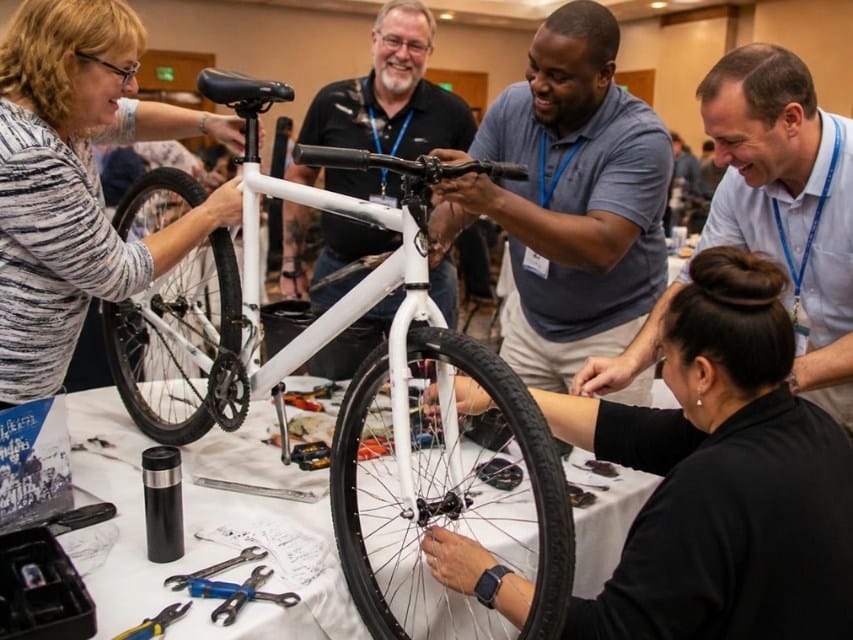
Today’s formats vary widely. Cooking experiences, escape rooms, creative workshops, structured conversations, off-site retreats, and short focused exercises run as part of a regular meeting all count. The thread is intentionality. The activity exists to strengthen the team, not just fill a calendar slot.
A great team building experience reads the team it is being designed for. Quiet teams need different formats than loud ones. New teams need different exercises than long-established ones. Hybrid teams need different rhythms than fully co-located ones.
The skill is matching the format to the team, not picking the most expensive option in the brochure. In practice, what is team building in a hybrid setup looks quite different from what is team building in a traditional office, even though the goal is the same.
Working with a planner like Zing Events helps because the formats that work for a team of fifteen rarely scale to a team of fifty without significant adjustment. The right structure makes the difference between a useful day and a forgettable one.
The Difference Between Team Building and Team Bonding
These two phrases get used interchangeably, which causes a lot of confusion. When someone asks what is team building, they often actually mean bonding. They are related but not the same.
Team bonding is informal. It includes after-work drinks, shared lunches, watercooler chat, and the small social fabric that holds a team together day to day. It happens naturally when conditions are right and falls apart quickly when they are not.
Team building is structured. It is deliberate, time-boxed, and usually has a stated goal. It happens because someone planned it. Both work together. Strong team bonding makes any team-building activity land more easily.
A good activity feeds back into stronger team bonding afterwards. Investing in both is the smart play. Solid team building days work better when there is already a healthy social baseline to build on.

Common Myths That Hold Companies Back
A few persistent myths get in the way of effective team building. Worth addressing each, because they shape how leaders answer the question of what is team building in their own organisations.
The first myth is that team building is a perk. It is not. It is a working investment with measurable returns on retention, engagement, and productivity. Treating it as a treat for high-performing teams and skipping it for struggling ones is exactly the wrong way round. The teams who need it most are the ones who get it least.
The second myth is that team building has to be expensive. It does not. A well-run two-hour exercise costs a fraction of a premium off-site and often delivers similar value if the design is right. The honest answer to what is team building worth is that it varies enormously based on intent, not budget.
The third myth is that team building is only for in-person teams. It is not. Remote and hybrid teams benefit even more because they have fewer accidental moments of connection. What is team building in a remote context just needs different design, not less investment.
The fourth myth is that team building only matters when something has gone wrong. It does not. Preventive team building is significantly cheaper than fixing a broken team. Strong team building in business settings sits in the calendar as a regular fixture rather than a reactive fix.
Frequently Asked Questions (FAQs)
1. How Often Should Companies Run Team-Building Activities?
Once a quarter for bigger team-level events, with smaller exercises baked into regular meetings throughout the year. Annual off-sites are not enough on their own. The rhythm matters more than the size of any single event, and asking what is team building actually achieving at your current frequency is a useful annual check.
2. Does Team Building Work for Remote Teams?
Yes, often more than for in-person teams. The lack of accidental social moments means structured time together matters more. Formats just need to be designed for remote or hybrid setups rather than copied from in-person playbooks.
3. How Do You Measure the Impact?
Look at engagement scores, retention rates, internal communication patterns, and how quickly new joiners settle in. Anonymous surveys a month after a team event also give honest feedback. Avoid measuring purely on day-of satisfaction, which tells you about the event but not the impact.
4. Who Should Organise It?
Whoever knows the team best and has time to plan properly. For smaller teams, that is often the team lead. For bigger company-wide moments, it is usually HR with an external partner. The worst outcomes come from delegating to someone who does not know the team well.
5. Is It Worth Using an External Provider?
For anything larger than a small team session, yes. External facilitators see patterns and avoid traps internal organisers miss. They also remove the awkwardness of someone from inside the team having to run an activity their own colleagues are part of.