Activities for corporate social responsibility should do more than tick a box.
They should mean something.
They should align with your company values.
They should engage your people.
They should make a visible difference.
And ideally, they should not feel like a compliance exercise.
If you are searching for activities for corporate social responsibility that genuinely combine team engagement with real world impact, this guide will help you choose properly.
Because not all CSR activities are equal.
Some feel forced.
Others create energy, pride and long term memory.
Let’s explore what actually works.
Why Activities for Corporate Social Responsibility Matter More Than Ever
Employees are increasingly values driven.
Clients are asking tougher questions about impact.
Investors expect evidence, not statements.
That means CSR can no longer sit in a PDF on your website.
It needs to be visible.
Done well, activities for corporate social responsibility can:
• Strengthen team connection
• Improve employee engagement
• Demonstrate purpose in action
• Support community partners meaningfully
• Reinforce company culture
The key is choosing formats that are structured, professional and genuinely beneficial to the cause.
What Makes Good CSR Team Building?
Before we dive into specific activities for corporate social responsibility, it is worth defining what good looks like.
Strong CSR team building should:
Have a clear charitable partner
Create a tangible outcome
Engage everyone in the room
Feel structured and professionally delivered
Connect back to your organisation’s values
If it feels like an afterthought, your team will notice.
If it feels purposeful, they will remember it.
Two of the strongest charity based formats we deliver consistently are Build A Bike and Putt A Hole In Hunger.
Both combine meaningful impact with structured team building.
Let’s break them down properly.
Build A Bike: CSR That Travels Beyond the Room
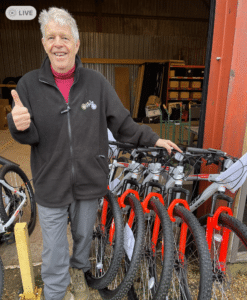
Build A Bike is one of the most powerful activities for corporate social responsibility because the outcome is immediate and tangible.
Here is how it works.
Teams complete collaborative challenges to earn bike components.
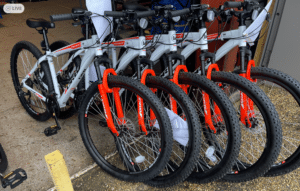
They then assemble full bicycles together.
At the end, the bikes are donated to Re-Cycle, a UK based charity that ships refurbished bikes to Africa, often to communities in Sierra Leone.
Why does this matter?
In many regions, a bike is not recreational.
It is transport to school.
Access to healthcare.
Economic opportunity.
Re-Cycle’s bikes are distributed through trusted partners, enabling children to reach education and adults to access employment.
For your team, the moment when the bikes are revealed and the impact explained is powerful.
It moves CSR from theory to reality.

Why Build A Bike Works So Well for Corporate Teams
Build A Bike works because:
It creates a clear physical outcome
Everyone contributes
It suits conference venues
It scales easily
It feels purposeful rather than preachy
It also works brilliantly during conferences where you want to combine commercial focus with social impact.
For leadership teams, it reinforces accountability.
For mixed departments, it encourages collaboration.
For purpose driven organisations, it aligns perfectly with ESG messaging.
Among activities for corporate social responsibility, few create such a visible legacy.
Putt A Hole In Hunger: Creativity With Immediate Community Impact
If your organisation wants to support UK communities directly, Putt A Hole In Hunger is a powerful option.
Here is the concept.
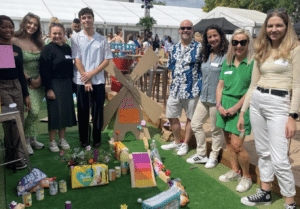
Teams design and build mini golf holes using food bank items.
Cans, cereal boxes, pasta packets and household essentials become creative obstacles.
Once the course is complete, teams compete.
At the end of the event, all food items are donated to The Trussell Trust, the UK’s largest food bank network.
The Trussell Trust supports a nationwide network of food banks providing emergency food parcels to people facing hardship.
This format connects directly with communities across the UK.
Why It Resonates With Employees
Putt A Hole In Hunger works because:
It is hands on
It is creative
It is light hearted but meaningful
It produces an immediate charitable donation
It sparks conversation
Employees see the volume of food collected.
They understand the scale of the issue.
And they know their effort has contributed.
Among activities for corporate social responsibility, this one balances engagement and impact beautifully.
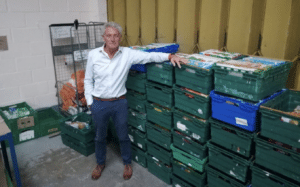
Comparing the Impact: Build A Bike vs Putt A Hole In Hunger
Both are strong activities for corporate social responsibility.
They simply focus on different types of impact.
Build A Bike
International reach
Long term mobility impact
Transport, education, employment access
Putt A Hole In Hunger
UK community support
Immediate food security relief
Support for families facing hardship
Choosing between them depends on your organisational focus.
Are you highlighting global outreach?
Or strengthening local community support?
Both align strongly with ESG reporting.
Both create tangible outcomes.
Both engage your team meaningfully.

How to Align CSR Activities With Your Company Strategy
When selecting activities for corporate social responsibility, avoid choosing purely on novelty.
Instead, consider:
Your ESG commitments
Your client expectations
Your employee values
Your annual impact reporting
Your geographic footprint
If your annual report references global community support, Build A Bike aligns well.
If you focus on UK social impact, Putt A Hole In Hunger reinforces that commitment.
CSR works best when it feels integrated, not isolated.
Can CSR Activities Also Improve Team Performance?
Absolutely.
Well structured charity team building does not sacrifice performance outcomes.
Build A Bike develops:
Collaboration
Planning
Resource allocation
Communication
Putt A Hole In Hunger develops:
Creativity
Problem solving
Team coordination
Time management
These are core workplace skills.
The difference is that the outcome extends beyond the boardroom.
That is why activities for corporate social responsibility can be both purpose led and performance enhancing.
Common Mistakes When Choosing CSR Activities
To avoid disappointment, steer clear of:
Token gestures with no measurable impact
Unstructured volunteering days with no facilitation
Activities that feel disconnected from company values
Overly complex logistics
Professional facilitation matters.
Clear charitable partnerships matter.
Visible outcomes matter.
If your team cannot see the impact, the activity will not resonate.
Why Charity Team Building Works So Well at Conferences
CSR activities fit naturally into:
Annual conferences
Leadership off sites
Sales kick offs
Company away days
They break up business content.
They provide emotional contrast.
They leave people with something tangible.
For many organisations, the charity element becomes the most talked about part of the day.
That is powerful.
Making Activities for Corporate Social Responsibility Measurable
If your board asks how CSR activities contribute to impact, you should be able to answer clearly.
With Build A Bike, you can report:
Number of bikes built
Estimated beneficiaries
Geographic distribution
With Putt A Hole In Hunger, you can report:
Volume of food donated
Number of parcels supported
Charity partner details
CSR should not be vague.
It should be measurable.
That makes it credible.