When the budget lands on your desk and someone asks you to sort out corporate activities London staff will not quietly resent, the pressure is real. Nobody wants to be the person who booked the afternoon everyone politely endured. The trick most planners miss is starting with the wrong question.
They ask what to book before they ask what the day is actually for. Flip that order and the whole thing gets easier. Below, the ideas are organised by the outcome you want rather than the type of activity, so you can work backwards from your goal to the right choice.
Start With the Outcome, Not the Activity
Every good team day answers a single question first, what should be different by the end of it? A team that has been at each other’s throats needs something very different from a team that has never met in person. Decide the outcome, then the format almost picks itself.
There are usually four honest outcomes behind any booking. You want people to trust each other more, to have more energy, to know each other properly, or to simply reset after a brutal stretch.
Naming the real one saves you from defaulting to whatever looked good online. The best corporate activities London planners run are the ones matched to a clear goal rather than a nice brochure photo.
Activities That Build Trust
Trust grows fastest when people rely on each other to finish something. Not through forced confessions, but through shared effort with a real result at the end.
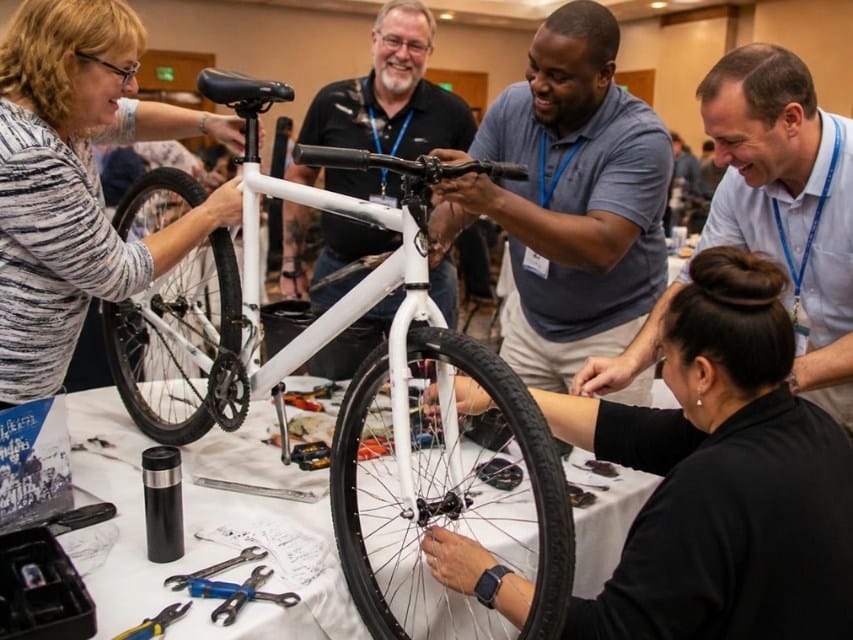
Build challenges work brilliantly here. Teams given a brief, a pile of materials, and a deadline learn who plans, who executes, and who keeps everyone calm. The finished object, whether a working contraption or a charity donation, becomes proof of what they did together.
Problem-solving formats like escape-style rooms do the same in miniature, forcing quieter people to speak up because the group genuinely needs their input.
The research backs this. A piece on the secrets of great teamwork points to psychological safety and clear shared goals as the biggest drivers of team performance, which is exactly what a well-run build challenge creates.
If your group has trust gaps, this is where to spend the money. Many of the strongest formats in this bracket double as charity team building events, so the output goes somewhere meaningful.
Activities That Inject Energy
Some teams do not need deeper bonds. They need waking up. Months of back-to-back deadlines flatten people, and the fix is movement, noise, and friendly competition.
Fast-paced formats deliver this in under an hour. Themed game shows, physical challenges with live scoring, and inflatable obstacle courses pull people out of work mode almost immediately.
The elevated heart rate does half the work, because a slightly raised pulse makes people laugh more easily and drop their guard. These high-energy formats work best in the late morning, before a heavy lunch drains the room.
Drumming and percussion sessions are an underrated option here. No skill is needed, the whole room locks into a rhythm within minutes, and the collective sound is genuinely uplifting.
For groups that want the buzz without the physical demands, this is the safest high-energy bet. A good morale boosting format lifts a tired team more reliably than any pep talk from management ever will.
Activities That Help People Actually Connect
Connection is different from trust. It is the simple fact of knowing your colleagues as people, which matters enormously for hybrid and fast-growing teams where half the group has never shared a meal.
Cooking experiences are the gold standard for this. Split across stations with a shared brief, people naturally chat while they chop and plate, and the meal at the end forces everyone to sit together.
Treasure hunts across the city do the same through movement, mixing walkers, talkers, and puzzle-solvers into small groups who have to cooperate to win. Both formats give everyone a way in regardless of personality.
Relaxed social formats work too. A boat trip on the Thames with food and a moving view lets people talk without the pressure of structured activity. When onboarding has been slow or a merger has thrown two groups together, connection-first days out tend to pay back for months.
Gallup’s work on how to improve employee engagement consistently flags workplace relationships as a top driver of long-term satisfaction.
Activities That Reset a Burnt-Out Team
The fourth outcome is the one people book least and need most. After a punishing quarter, the worst thing you can do is pile on a high-stakes challenge. The right move is decompression.
Creative, low-pressure formats shine here. Pottery, candle making, screen printing, and life drawing give a calm pace, a tangible takeaway, and zero competition. Nobody wins, nobody loses, and everyone leaves with something they made.
Wine or whisky tasting works for groups who prefer sitting and talking, because the structured format takes the pressure off small talk. Guided sessions like these also carry their own quiet momentum, so nobody has to force conversation or perform for the room.
The key with a reset day is permission. Make it clear there is no hidden agenda, no performance review dressed up as fun.
The moment people sense a test in disguise, the restfulness evaporates and you are back to another obligation. Working with a planning partner like Zing Events helps here, because they can shape a genuinely restful day rather than sneaking objectives into it.
Solid team building days built around recovery often do more for retention than another round of high-energy competition. A team that feels looked after tends to return the favour in effort and loyalty over the months that follow.

Matching Venue and Timing to the Goal
Once the outcome is clear, two practical choices seal the day. The first is the venue, which sets the tone before anyone arrives. A converted warehouse says something different from a hotel function room, and a rooftop different again. Pick the space that matches the feeling you want.
The second is timing. Morning slots suit high-energy formats when people are fresh. Afternoons suit connection and creative resets. Avoid scheduling anything demanding straight after a big lunch, because the energy rarely recovers.
Build a buffer between segments so a late start does not collapse the whole plan. Strong away day ideas treat logistics with the same care as the activity itself, and that discipline is what separates a smooth day from a stressful one.
It also pays to think about location in practical terms. The best corporate activities London teams attend are easy to reach for the majority, so travel time does not eat into the day or leave people arriving frazzled.
Central spots keep commutes short and give you a wider choice of venues, while somewhere with outdoor space nearby gives you a fallback if the group needs a change of scene. Small details like step-free access, cloakroom space, and a quiet corner for anyone who needs a breather all add up to a day that feels considered rather than rushed.
Frequently Asked Questions (FAQs)
1. How Do I Choose Between All the Options?
Start with the outcome. Decide whether the team needs trust, energy, connection, or a reset, then shortlist only the formats that serve that goal. Filtering by outcome cuts the overwhelming list of corporate activities London offers down to a handful of sensible choices in minutes.
2. What Budget Should I Expect Per Person?
Costs range widely. A simple quiz or park-based session can start around £30 per head, while premium creative workshops or venue hire climb to £150 or more. Build in a contingency of roughly 10 percent for last-minute guests or changes, and remember that facilitators and venue usually cost more than the activity itself.
3. How Long Should the Day Run?
Three to four hours suits most single-activity formats. Half-day plans allow two shorter activities plus food, and full days work for larger groups when split by a proper meal. Beyond five hours, energy dips unless you change the setting or build in a real break.
4. What if the Team Is Hybrid or Remote?
Remote-first teams gain the most from in-person days because they so rarely get unplanned time together. Book well ahead, cover travel where you can, and treat the day as a reunion rather than another meeting. The connection gains tend to last far longer than the event.
5. Should I Use an External Provider?
For anything larger than a small internal session, yes. External facilitators read the room, adjust pace on the fly, and avoid the traps internal organisers miss. They also remove the awkwardness of a colleague having to run an activity their own teammates are part of.
Getting corporate activities London teams genuinely value comes down to one discipline, decide the outcome first, then let the goal choose the format, the venue, and the timing for you.