If you have been searching for outdoor team building games that suit your particular group, you have probably noticed that most lists treat every team the same. They lump everyone into one bracket, suggest the same three classics, and hope for the best.
The problem is that what energises a competitive team will quietly drain a creative one, and what unlocks a creative team will leave a competitive one bored within the first ten minutes. Reading the room first matters more than picking the activity, and the right game depends entirely on what kind of team you are actually working with.
Reading Your Team Before You Pick a Game
Before you book anything, ask yourself two questions. First, does this group thrive on winning or on making? Second, are people more energised by adrenaline or by ideas? The answers point you toward very different formats.
A competitive team will be the first to ask about scores, brackets, and rules. They want a clear goal, a clean finish, and bragging rights. They get bored when activities lack stakes.
A creative team will be the first to ask about themes, materials, and freedom to interpret. They want room to play and a sense that the process matters as much as the result. They get frustrated when an activity is too rigid.
Most teams are a mix, of course. But there is usually a leaning, and matching outdoor team building games to that leaning is what separates a great day from a polite one.
A piece on the cognitive benefits of play notes that play increases creativity and job satisfaction specifically when the format suits the people in it. The best outdoor team building games match their formats to the actual group rather than starting with the activity.
Outdoor Games Built for Competitive Teams
Competitive teams want clear winners and meaningful challenges. The following five outdoor team building games deliver on both.
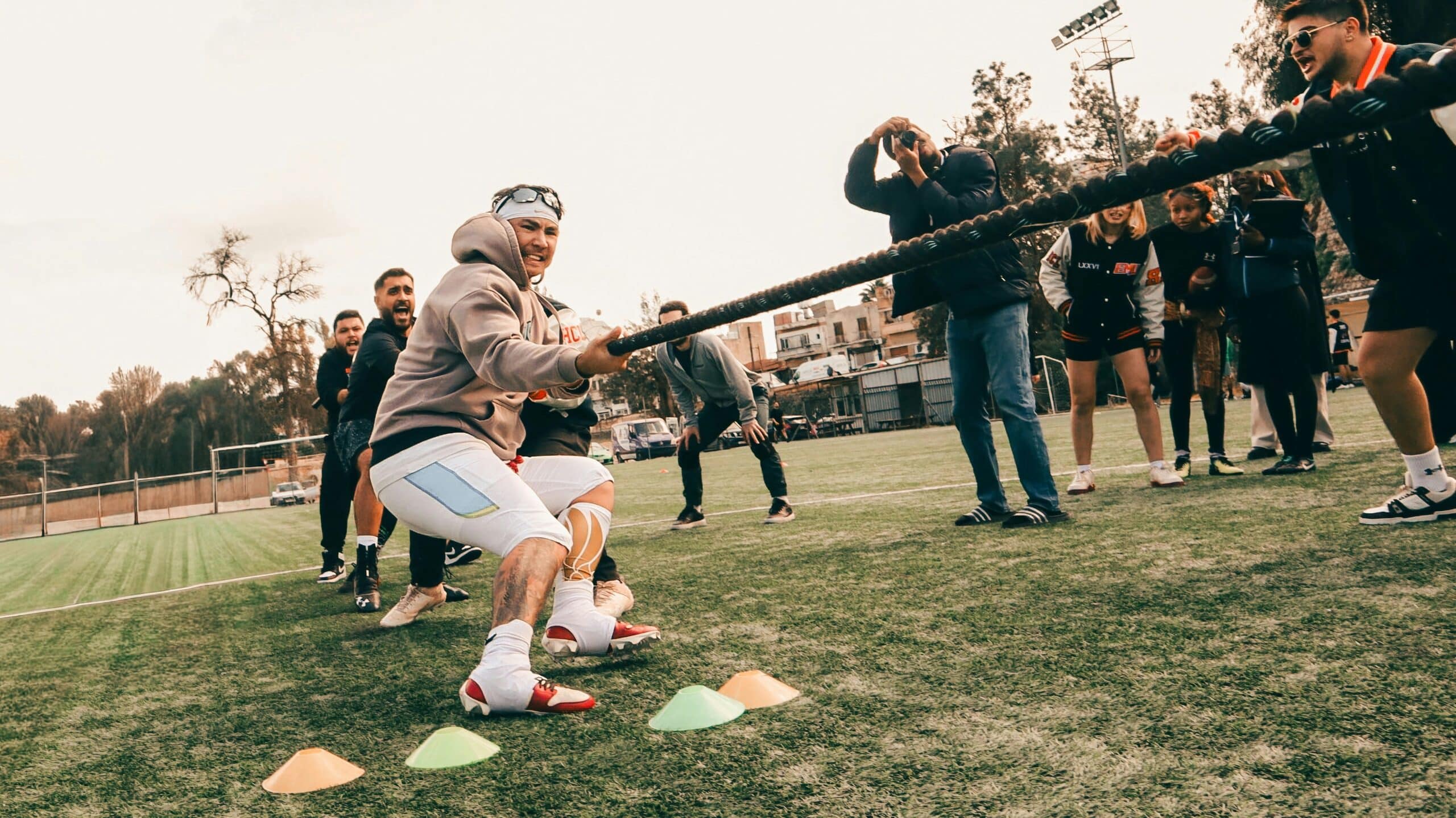
- Field-based mini tournaments. Set up five short stations like welly throwing, tug of war, target practice, sack race, and a relay. Teams rotate through, points are tallied, and a winner is crowned at the end. Quick to organise, big payoff in energy.
- Outdoor escape challenges. A larger outdoor space hosts a series of puzzles teams must solve in sequence. The format adds a navigation and timing layer that competitive teams love.
- Treasure hunts with leaderboards. Different from the casual city version, the competitive treasure hunt scores teams on speed, accuracy, and bonus tasks. The leaderboard is updated live, which keeps energy up across the whole event.
- Archery tag. A combination of dodgeball and archery using foam-tipped arrows. Surprisingly easy to pick up, brilliantly competitive, and even the most skeptical team members usually get hooked after the first round.
- It’s a Knockout-style inflatable challenges. Massive inflatables, themed obstacles, and team scoring. Cheesy in the best way, and the photos from the day are usually gold.
These higher-energy formats sit alongside well-run team building days where outdoor games are paired with food, drinks, and a social wind-down. The structure of competition followed by relaxation creates the right arc for the day.
MIT-led research on the new science of building teams found that the most important predictor of success was the communication patterns formed in shared activity, which competitive outdoor games naturally generate.
Outdoor Games That Spark Creative Thinking
Creative teams want different inputs. The five outdoor team building games below lean into making, exploring, and lateral thinking.
- Outdoor brand-building challenges. Teams are dropped into a park or outdoor space with a brief to invent a product or service inspired by what they can see around them. Pitches happen at the end. Genuinely funny ideas come out.
- Photography scavenger hunts. Teams are given a list of creative photo briefs to capture during a set time. The judging round at the end is the highlight, with everyone scrolling through the entries together.
- Land art and natural sculpture. Borrowed from the Andy Goldsworthy school of outdoor art. Teams use only what they can find in the environment to build something temporary. Quiet, oddly meditative, and the photographs are surprisingly beautiful.
- Storytelling walks. A guide takes the group on a walk and stops at points where teams have to invent a short story tied to the location. Layered, conversational, and good for teams who love language and narrative.
- Outdoor design challenges. Teams are given simple materials and a brief to build something useful, like a shelter, a chair, or a small bridge. Engineering meets imagination, with a debrief about how the team made decisions.
Creative outdoor team building games work especially well in unusual venues. Spaces dedicated to team building in central London often include access to outdoor courtyards, rooftops, or nearby parks, which keeps logistics simple.
Crossover Games That Suit Both Personalities
Some outdoor team building games work brilliantly for mixed groups because they invite competition and creativity at the same time.
- Survival skills challenges. Fire-starting, shelter-building, and basic foraging led by a professional. Competitive teams race; creative teams problem-solve. Both leave proud.
- Outdoor cookouts with a twist. Teams compete to cook the best dish using foraged or unusual ingredients on an outdoor fire. The competitive edge meets the creative format perfectly.
- Adventure relays with theme rounds. Standard relay legs are mixed with creative tasks like writing a haiku at one checkpoint or building a small sculpture at another. Keeps both types of personality engaged throughout.
These crossover formats are often the most reliable team away days when you do not yet know your group well enough to predict their leaning. A planning partner like Zing Events can help shape these around the group’s actual size and venue. The right outdoor team building games for a hybrid group typically blend competition with creative interludes.
Weather, Kit, and Logistics That Make or Break the Day
Outdoor events live or die on the things people forget to plan. A well-designed activity flops if the basics are missed. The following are non-negotiable.
Weather contingency is the biggest one. Always have a covered backup space within walking distance. British weather will surprise you at least once. Communicate dress code in writing.
People consistently underdress for outdoor events, then spend half the day cold and miserable. Provide shelter, water stations, and seating areas. Standing for four hours is harder than people think. Bring a first-aid kit and brief one or two people on its location.
Toilets are the unsexy but critical detail. Confirm access before booking. Same for power if any of the games need amplification. Confirm noise restrictions if the venue is near residential areas. Confirm public liability insurance with any provider running active games.
For larger or more complex outdoor team building games, also confirm timing buffers. People will be late. Food will run late. Activities will overrun. Build in a 15 minute buffer at every transition and you will not have to apologise to anyone. Strong organisers run consistent away day ideas because they treat logistics with the same rigour as the activity selection itself.
Frequently Asked Questions (FAQs)
1. What Group Size Works Best for Outdoor Games?
Most outdoor team building games scale from 12 up to 100 with the right setup. Below 12, the energy can feel thin in larger outdoor spaces. Above 100, you typically need to split into clusters and rotate through stations to keep everyone engaged.
2. What Happens if It Rains?
Always book with a covered backup option. The best outdoor team building games providers include this as standard. For events in winter or shoulder seasons, build flexibility into the schedule so a sudden downpour shifts you indoors without ruining the day.
3. Are These Suitable for Teams With Mixed Fitness Levels?
Yes, with planning. Offer non-physical roles in every game like timing, judging, or strategising. Avoid formats that require everyone to run, climb, or carry. Communicate accessibility in advance so anyone with concerns can flag them privately.
4. How Long Should an Outdoor Team Day Last?
Three to five hours including breaks works well for most outdoor team building games. Beyond that, energy fades unless you split the day with a proper meal and a clear transition. Full-day formats need at least two distinct activity blocks separated by food.
5. What Should the Budget Look Like?
Outdoor team building games range from £40 per head for a basic park-based event to £180 per head for premium events with venue hire, food, and multiple activity sessions. The bulk of the cost usually goes to venue, facilitators, and kit rather than the activities themselves.