Planning team building activities for small groups feels like it should be easier than wrangling fifty people, yet it often trips managers up in a different way. Advice online is built for big numbers, with rotating stations, large-scale competitions, and formats that fall flat when only six or eight people show up.
A small team needs a different approach, one that treats its size as a strength rather than a limitation. When there are fewer people in the room, everyone matters more, every voice carries, and the connections run deeper. This guide leans into exactly that, with ideas designed to make a small team feel mighty.
Why Small Teams Have a Hidden Advantage
Before the ideas, it is worth reframing how you think about a small group. Managers often see the low headcount as a constraint. In practice it is the opposite. A small team can do things a large one simply cannot, and the best formats exploit that.
With fewer people, nobody hides at the back. Everyone participates by default, so the quiet member who would vanish in a crowd of forty is right there in the mix. Conversation flows more naturally, decisions happen faster, and the whole group can share a single experience rather than splintering into cliques.
The intimacy is the point. Great team building activities for small groups do not try to imitate big-team events on a smaller scale. They embrace the closeness that only a small group allows.
Intimate Formats That Play to Closeness
The strongest small-group formats are the ones where everyone is doing the same thing together, in one space, at the same time. No splitting, no sitting out, just a shared experience the whole team lives through.
Cooking and baking sessions are ideal here. Six to ten people around a kitchen, a shared brief, and a meal at the end gives everyone a role and a reason to talk.
Cocktail-making classes work the same way, with a host walking the group through each drink while conversation warms up. These formats suit a small team perfectly because the group is small enough for one facilitator to give everyone attention.
Tasting experiences also shine. A wine, whisky, or coffee tasting led by an expert gives structure to the chat, so nobody has to force small talk. The team bonding activities that suit these close-quarters sessions tend to run deeper than anything a large event produces, precisely because there is nowhere to hide and no crowd to disappear into.
Problem-Solving Activities Where Every Person Counts
Small teams are brilliant for problem-solving formats, because the maths works in their favour. In an escape room built for eight, every single person has to contribute or the group fails. There is no passenger seat.
Escape rooms are the obvious pick. The sixty-minute timer forces even the quietest member to speak up, often spotting the clue nobody else did. Puzzle-based challenges and mini mysteries do the same, rewarding the mix of minds a small team brings.
Because the group is small, the debrief afterward is richer too, with everyone able to talk through what happened rather than comparing notes across dozens of people. Research on the secrets of great teamwork points to shared goals and clear roles as the biggest drivers of team performance, and a small problem-solving group creates both almost automatically.
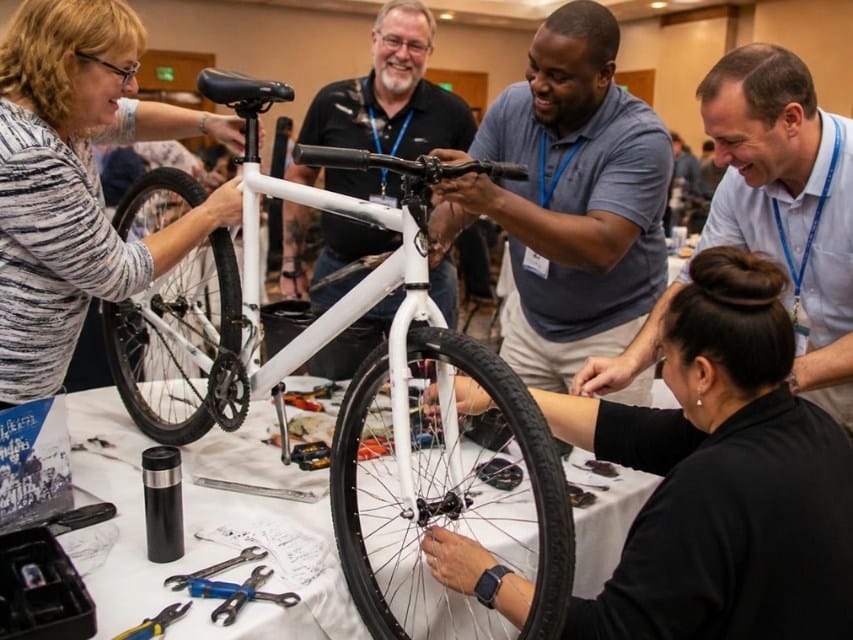
Strategy games and build challenges round this out. Given a brief and some materials, a small team learns who plans, who executes, and who keeps everyone calm, all in real time.
These formats turn size into an asset, since the contribution of each person is visible and valued. Well-run team building days built around a small group often achieve more depth in an afternoon than a big event manages all day.
Creative Sessions That Suit a Tiny Team
Creative formats are a natural fit for small numbers, because they reward focus and individual expression over crowd energy. A room of eight making something together has a calm, productive buzz that a large group rarely captures.
Pottery, candle making, screen printing, and life drawing all give a relaxed pace and a tangible takeaway. Nobody competes, nobody loses, and everyone leaves with something they made. For a small team that has been under pressure, this kind of low-stakes creativity doubles as a reset.
Research on the cognitive benefits of play notes that relaxed, playful activity lifts creativity and job satisfaction precisely because it removes the pressure of stakes. Drumming or percussion sessions add energy while still working beautifully for tiny groups, since the whole team locks into one rhythm within minutes.
The advantage of creative sessions at this scale is how personal they become. With so few people, the facilitator can tailor the session to the team, and the results feel genuinely individual rather than mass-produced.
A partner like Zing Events can help match the format to the specific personalities in a small team, which matters far more when every person is a large slice of the whole.
Getting Out and About With a Small Group
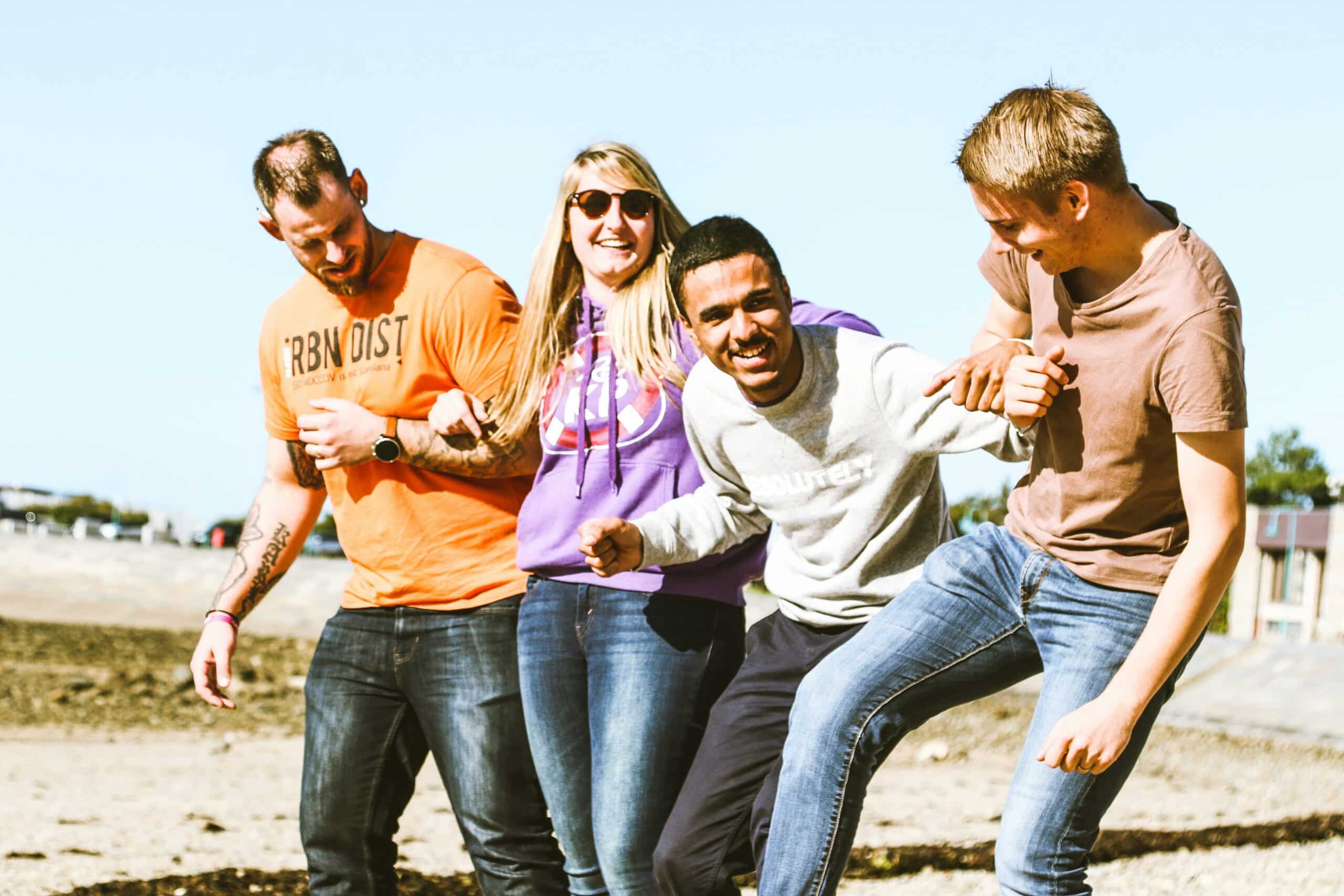
A small team is also wonderfully mobile. Where fifty people need coaches and careful logistics, a group of eight can simply go somewhere interesting together, which opens up options a big event could never manage.
City treasure hunts work well, sending a small team roaming between landmarks solving clues, mixing walkers, talkers, and puzzlers as they go.
A boat trip on the Thames suits a small group who want food, drinks, and a moving view without the fuss of a big booking. Even a well-chosen meal out becomes an event when the group is small enough to share one table and one conversation.
The freedom is the benefit. Small teams can be spontaneous, change plans on the fly, and fit into venues that turn larger bookings away.
Even a compact session can carry real weight, and some of the best quick team building formats come down to simply going somewhere together and letting the closeness do the work. When the logistics are light, the day feels relaxed rather than regimented.
Frequently Asked Questions (FAQs)
1. What Counts as a Small Group?
Generally anything from around four to fifteen people. Below four, some formats lose their spark, while above fifteen you start needing the splitting and rotation that big-group events rely on. The sweet spot for most small-team events is six to twelve, where everyone can share one experience.
2. Are Small-Group Events Cheaper?
Often, but not always per head. Total cost is lower because there are fewer people, though the per-person price can be higher since facilitator and venue fees are split across fewer heads. The upside is a more tailored, higher-quality experience for the money.
3. How Do I Include a Very Quiet Team Member?
Small groups actually help here, because there is no crowd to hide in. Choose formats with built-in roles, like cooking or problem-solving, where the quiet person contributes naturally. Avoid anything that forces individuals to perform solo in front of the others.
4. How Long Should a Small-Group Activity Run?
Two to four hours suits most single activities, with a half-day allowing an activity plus a relaxed meal. Small groups tend to move faster than large ones, so you can often fit more in, but leave slack for the longer conversations a small team naturally has.
5. Can Small Teams Do Competitive Formats?
Yes, with a tweak. Rather than team-versus-team, use formats where the whole small group races a clock or a challenge together, like an escape room or a timed build. That keeps the competitive buzz without the awkwardness of pitting a handful of colleagues against each other.
The best team building activities for small groups never try to shrink a big event down. They lean into closeness, shared experience, and the simple fact that in a small team, every single person truly counts.