An adult sports day is one of the easiest team events to sell and one of the easiest to get wrong. Everyone loves the idea of egg and spoon races on the grass.
Nobody loves the sound of a finance director pulling up mid-sprint, clutching the back of his leg. The trick is keeping all the nostalgia, the cheering and the cheap plastic medals, while taking the flat-out running and the bruised egos out of the equation.
If you have never run one, the format is simple. It is the school sports day you remember, rebuilt for colleagues, teams, a points table, classic races, a few field events and a prize-giving at the end. The difference is that the people taking part now have desk jobs, dodgy knees and a strong urge to prove they have still got it. This guide covers how to plan for all three.
Why Grown-Ups Get Hurt at Sports Day
Children bounce. Adults, especially ones who last sprinted for a train, do not. Most of the risk on the day comes down to a handful of things you can plan around.
- Cold muscles. People arrive, put their bags down and go straight into a race. The NHS guidance on hamstring injury recommends warming up before exercise to keep muscles flexible.
- Going from zero to full speed. A straight sprint against your manager brings out a competitive streak most people did not know they had, and very few of them have run flat out in years.
- Tired legs. The same NHS page points out that you are more likely to get injured when your muscles are tired. A packed programme with no breaks makes this worse as the afternoon goes on.
- The wrong shoes. Office loafers and sandals on damp grass are a slip waiting to happen.
- A drink too early. A glass of fizz before the three-legged race does nothing for anyone’s coordination.
Plan around those five and the day is off to a much safer start before you have chosen a single event.
Pick Events That Reward Skill and Silliness Over Speed
The best events for an adult sports day are the ones where the fastest person does not automatically win. Balance, aim, teamwork and a bit of luck keep things level, and they stop the most competitive people in the office from treating it like an Olympic trial.
If sports day sits inside a wider summer plan, our corporate summer party guide has ideas for building the rest of the day around it.
The Classic School Races, With a Few Tweaks
These are the events people come for, so keep them, but adjust the rules slightly.
- Egg and spoon. Naturally slow, because speed breaks eggs. Use plastic eggs or potatoes if you want less mess.
- Sack race. Huge fun, but the falls are real. Run it on soft, flat grass and make it a hop rather than a sprint by shortening the distance.
- Three-legged race. Pair people across departments. It is less about pace and more about two strangers agreeing on which foot goes first.
- Bean bag on the head. Walk, do not run. Anyone who drops it goes back to the start, which slows everyone down nicely.
Field Events With the Danger Taken Out
Track and field events add variety and give people who hate racing something to aim for.
- Foam javelin. All the drama of a javelin throw with none of the risk to spectators.
- Medicine ball put. Swap the shot put for a soft medicine ball and score on distance.
- Welly wanging. Throwing a wellington boot is gloriously British and needs no running at all.
- Target throws. Bean bags into hoops or buckets reward aim over strength.
Games for the Trackside Crowd
Not everyone wants to race, and a good sports day gives them something to do besides stand around. Giant Jenga, Connect 4, a penalty shoot-out or a quick-fire quiz zone keep people involved between races and let teams score points without breaking a sweat.
This is also where quieter colleagues often come into their own, and our outdoor team building games guide has more ideas that work well on the grass.
Events to Adapt or Skip
Some events look harmless and are not. A straight 100 metre sprint invites people to go flat out from a standing start. Wheelbarrow and piggyback races ask a lot of wrists, backs and knees. Tug of war can end with people falling backwards in a heap.
If you want to include any of these, change the format, run sprints as relays with a walking leg, or swap tug of war for a team challenge where everyone pulls in the same direction. For a larger event, the Health and Safety Executive’s guidance on running an event safely is a sensible starting point for thinking through risks like these and planning for emergencies.
Build a Warm-Up People Will Actually Do
Ask a group of office workers to stretch and you will get three people touching their toes and forty checking their phones. A warm-up only works if it feels like part of the event rather than a chore before it.
Make it a performance. Get a host in a retro tracksuit and a whistle to lead it, put on some music and treat it like the opening ceremony. Keep it short, ten minutes or so, and build gently from walking to light jogging on the spot, arm circles, leg swings and a few side steps.
Finish with something silly, like a team chant or a mass conga lap of the field, so people are warm, loose and laughing before the first race.
The same idea works between sessions. A quick shake-out after lunch helps legs that have been sitting still on a picnic blanket for half an hour.
Rules That Quietly Stop People Going Full Throttle
Good rules do more for safety than any amount of warnings. A few ideas that keep the pace sensible without killing the fun:
- Points for style, not just speed. Award extra points for team spirit, best costume or most creative celebration.
- Walking races. A strict “one foot on the ground” rule turns a sprint into a comedy event.
- Shorter distances. Twenty or thirty metres is plenty for most novelty races.
- Limit entries. Cap how many races any one person can enter, so the keen ones do not end up running six events back to back.
- Mixed teams. Spread departments, ages and fitness levels across every team so no group is stacked.
- Bonus rounds. Let teams play a joker on one event to double their points. It adds strategy and shifts attention away from raw pace.
If you want more ideas on scoring that brings people together rather than splitting them, our piece on corporate games covers how to reward the team over the individual.
Make It Work for Every Body in the Team
A sports day where only the sporty people enjoy themselves is a failed sports day. Build in ways for everyone to take part, whatever their fitness, mobility or confidence.
Give every team a few non-running roles, a captain, a scorekeeper, a team cheerleader, a judge for the style points. Include events that suit seated players, such as target throws or the quiz zone. Make it clear in advance that taking part is optional and that cheering counts.
Ask people privately before the day if they have any injuries or access needs, so you can plan around them without anyone having to explain themselves in front of colleagues.
For hybrid teams, the day can also be a rare chance to get everyone in the same place. Pick a date early, share it widely and keep the format relaxed so people travelling in feel it was worth the trip. Our guide to corporate days out covers the wider planning, from setting a purpose to following up afterwards.
Adult Sports Day Logistics: Space, Weather and Timing
This is the part that decides whether the day runs smoothly.
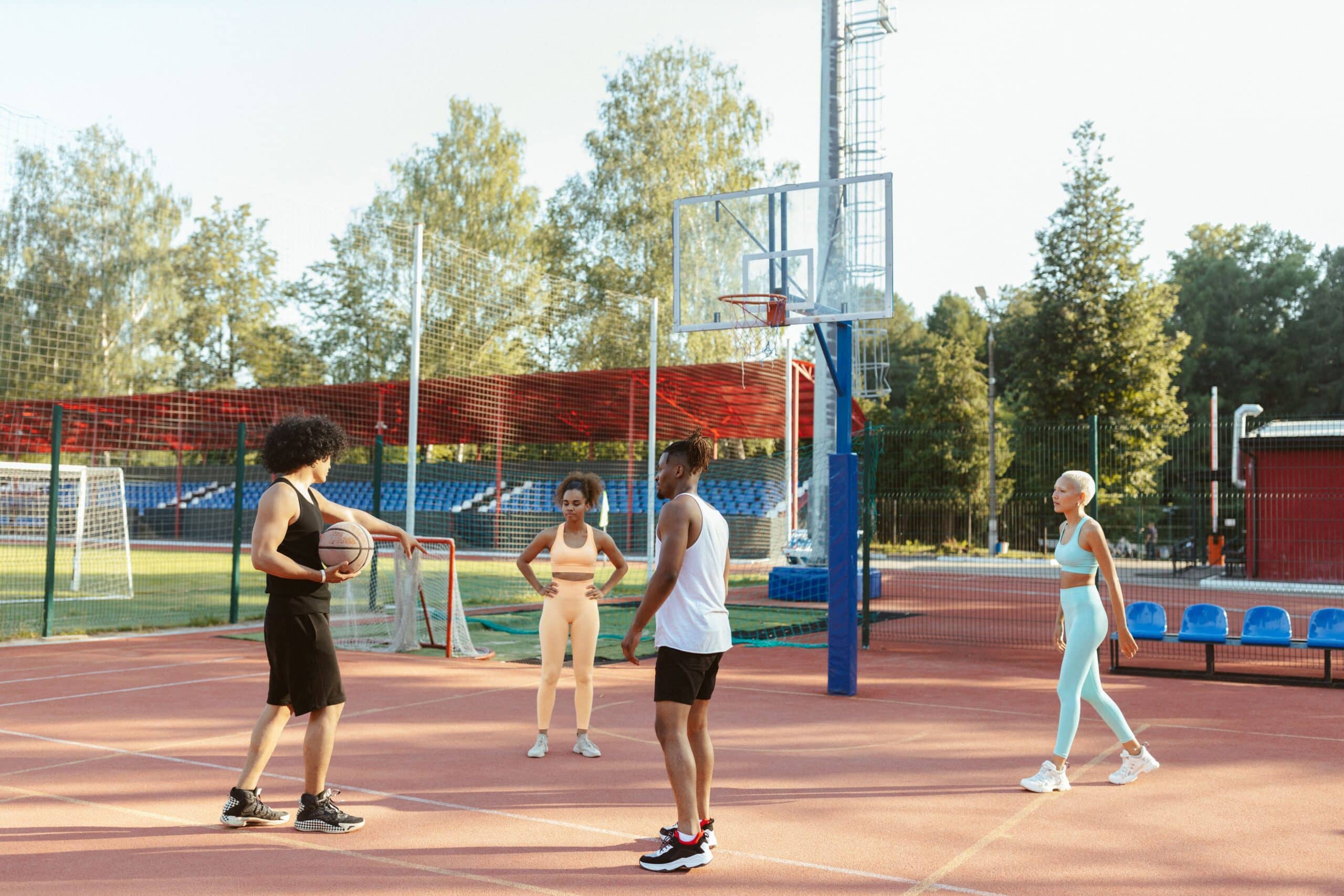
The ground. You need a flat, open stretch of grass. Walk it beforehand and look for holes, slopes, sprinkler heads and anything else that could catch an ankle. Mark out lanes clearly and keep spectators back from the throwing area.
The weather. A warm day is the dream, but heat brings its own risks. The NHS advice on how to cope in hot weather includes staying in the shade between 11am and 3pm and drinking plenty of fluids.
Put water stations at both ends of the track, set up shade for spectators and keep sun cream on hand. If rain is forecast, have a covered space nearby and a shortlist of events that work indoors.
Safety basics. Have a first aid kit on site and someone who knows how to use it. Check your venue’s own safety requirements too.
Clothing. Tell people in writing to wear trainers and clothes they can move in. It sounds obvious. Someone will still turn up in heels.
Drinks. Save the bar for the prize-giving. It gives everyone something to look forward to and keeps the races steady.
A Sample Running Order
For a team of around 40 to 80 people, a two-and-a-half-hour afternoon might look like this:
- Arrival and team sorting (15 minutes). Hand out team colours and name the captains.
- Warm-up (10 minutes). Led by the host, with music.
- Classic races (40 minutes). Heats for the bigger groups, with the quiz zone and giant games running alongside.
- Water and shade break (10 minutes).
- Field events (35 minutes). Teams rotate between stations.
- Relay finale (20 minutes). Every team member takes part, with walking and novelty legs.
- Prize-giving and drinks (20 minutes). Medals, a winning team and a photo for the newsletter.
Adjust the timings to suit your group. Bigger teams need more heats and more stations, smaller teams can move through faster.
DIY or Hand It Over?
A small adult sports day for a single team is easy enough to run yourself with a borrowed park, a few sacks and a willing colleague on the whistle. Once you are past a few dozen people, the kit, timings, scoring and safety checks start to add up.
That is where a hosted option helps. Zing Events runs a school sports day activity that comes to your venue, with a host-led warm-up, classic races, track and field events, a quiz zone and giant games, plus all the equipment, sound system and medals. It works for groups from 5 to over 500.
Frequently Asked Questions (FAQs)
1. What Is an Adult Sports Day?
It is a grown-up version of the school sports day, usually run as a team building or social event. Colleagues are split into teams and compete in classic races, field events and novelty games for points and medals. The emphasis is on fun and team spirit rather than athletic ability.
2. How Many People Do You Need?
You can run one with a single team of ten or so, but it works best when you have at least three or four teams to compete against each other. Large organisations can scale it up to hundreds of people with heats and multiple stations running at once.
3. How Do We Include People Who Do Not Want to Run?
Give them roles that matter, such as captain, scorekeeper or judge, and include events that need aim or brainpower rather than speed. Make it clear from the start that cheering and supporting is a valid way to take part.
4. What Should People Wear?
Trainers and comfortable clothes they can move in. Team colours, T-shirts or sweatbands add to the atmosphere and help spectators follow the scores. Flag the dress code in the invite and again a day or two before.
5. When Is the Best Time of Year to Hold One?
Late spring through to early autumn gives you the best chance of dry ground and decent weather. Avoid the hottest part of the day in mid-summer, and always have a backup plan for rain.
Run it with a proper warm-up, sensible rules and events that reward teamwork over speed, and your adult sports day will be remembered for the egg and spoon drama rather than the ice packs.